How to Read a Certificate of Analysis for THCA
When buying THCA products, you may come across a laboratory document called a Certificate of Analysis, commonly shortened to COA.
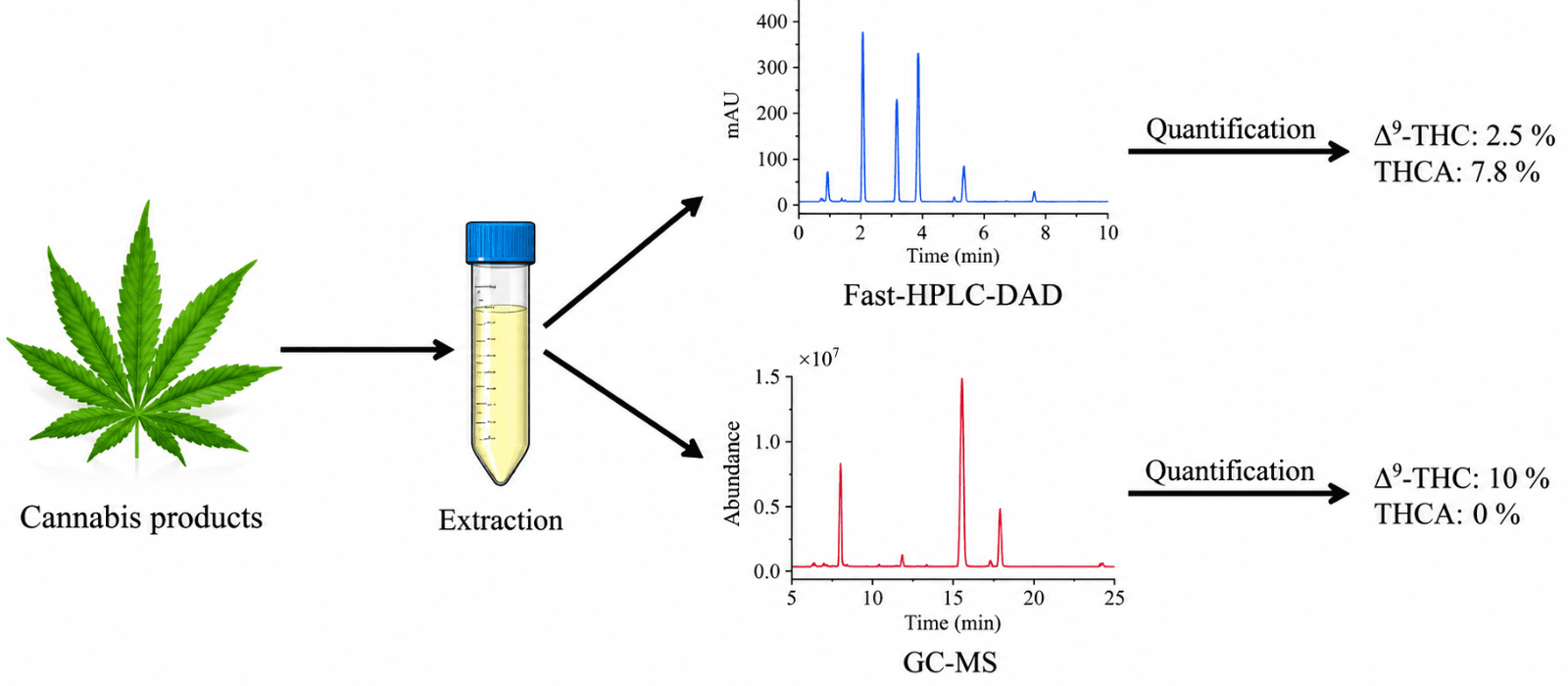
A THCA COA provides laboratory data about a product and can show the measured concentrations of cannabinoids such as THCA, delta 9 THC, CBD, CBDA, CBG, CBGA, CBN and CBC.
Understanding how to read a THCA lab report makes it easier to see what a product actually contains instead of relying only on the percentage shown in its product name.
This guide explains the most important parts of a cannabinoid COA, including THCA percentage, delta 9 THC, Total THC, cannabinoid profiles and batch information.
What Is a COA?
A Certificate of Analysis is a laboratory report containing test results for a specific product or sample.
For cannabis and industrial hemp products, a COA can provide a detailed breakdown of the cannabinoids detected during laboratory analysis.
Depending on the laboratory and type of analysis, the report may also contain information about contaminants, solvents, pesticides, heavy metals or microbiological testing.
Not every COA includes the same tests, so it is important to check what has actually been analysed rather than assuming that a cannabinoid test also covers contaminants.
Finding the THCA Percentage
For a THCA product, one of the first values to look for is THCA, or tetrahydrocannabinolic acid.
The result may be displayed as a percentage or in another measurement such as mg/g.
For example, if a laboratory report states:
THCA: 25.00%
this means the laboratory measured THCA at 25% of the tested sample by weight.
High-concentration products such as THCA Diamonds, THCA Isolate, THCA Live Resin and THCA Hash may have significantly higher THCA percentages than conventional THCA flowers.
Finding Delta 9 THC
THCA and delta 9 THC should not be confused on a laboratory report.
They are separate cannabinoids and are normally listed separately on a COA.
A report could, for example, show:
THCA: 25.00%
Delta 9 THC: 0.15%
This does not mean the product contains only 0.15% of all THC-related compounds. It means the laboratory measured 0.15% delta 9 THC in the sample while THCA was measured separately.
This distinction is particularly important when reading laboratory results for high-THCA cannabis products.
THCA vs Delta 9 THC on a Lab Report
THCA is the acidic precursor to THC naturally found in raw cannabis.
Delta 9 THC is a separate cannabinoid associated with the intoxicating effects of cannabis.
When THCA is sufficiently heated, it can undergo decarboxylation and convert into delta 9 THC.
Because of this chemical relationship, some laboratory reports provide both the measured delta 9 THC concentration and a calculated value known as Total THC.
What Does Total THC Mean?
Total THC is different from simply reading the delta 9 THC number on a COA.
A commonly used calculation is:
Total THC = Delta 9 THC + (THCA × 0.877)
The factor 0.877 accounts for the difference in molecular mass when THCA loses carbon dioxide during decarboxylation.
For example, a hypothetical product containing:
THCA: 25.00%
Delta 9 THC: 0.15%
would have a theoretical Total THC calculation of:
0.15 + (25 × 0.877) = 22.075% Total THC
This is a calculated potential value. It should not be confused with the amount of delta 9 THC directly measured in the original sample.
Understanding the Cannabinoid Profile
A good cannabinoid analysis can show considerably more than THCA and THC.
You may see cannabinoids including:
THCA – tetrahydrocannabinolic acid
Delta 9 THC – delta 9 tetrahydrocannabinol
CBD – cannabidiol
CBDA – cannabidiolic acid
CBG – cannabigerol
CBGA – cannabigerolic acid
CBN – cannabinol
CBC – cannabichromene
The exact profile depends on the product and what the laboratory tested.
Looking at the complete cannabinoid profile can therefore provide a much clearer picture than focusing only on the largest percentage.
What Do ND and LOQ Mean?
Laboratory reports often contain abbreviations that can initially look confusing.
ND normally means Not Detected, meaning the laboratory did not detect the compound at the applicable reporting level.
You may also see LOQ, which means Limit of Quantification. This refers to the lowest concentration the laboratory's method can reliably quantify under its stated conditions.
A result below a laboratory's reporting or quantification threshold should not automatically be interpreted as proof that the compound is absolutely absent.
The definitions and thresholds used by the specific laboratory should always be checked on the report itself.
Check the Batch Information
A COA is most useful when it can be connected to the product you actually purchased.
Look for information such as a sample ID, batch number, lot number, product name and testing date.
If the product packaging displays a batch or lot number, compare it with the information on the laboratory report.
A laboratory result from an unrelated batch does not necessarily describe the cannabinoid content of the product in your possession.
Check the Laboratory and Test Date
A COA should identify the laboratory that performed the analysis.
It should also normally contain dates relating to when the sample was received, tested or reported.
These details help establish which sample was analysed and when the analysis took place.
For products sold across multiple batches, newer products may have different laboratory results from previous batches because cannabinoid concentrations can vary.
Cannabinoid Testing Is Not the Same as Safety Testing
One of the easiest mistakes when reading a COA is assuming that the word lab tested means the product has been tested for everything.
A cannabinoid potency test may only analyse cannabinoids.
Separate testing may be required for categories such as pesticides, heavy metals, residual solvents, microbial contamination or other contaminants.
If these tests matter for the product you are evaluating, check that the COA actually contains the relevant results.
Why COAs Matter for THCA Products
THCA products can vary considerably in cannabinoid concentration.
A flower marketed as 25% THCA is very different from an isolate or diamond product approaching extremely high THCA purity.
Laboratory reports allow customers to compare these products using measured cannabinoid data rather than product names alone.
They are particularly useful when comparing THCA Buds, THCA Hash, THCA Pre Rolls, THCA Diamonds, THCA Isolate and THCA Extracts.
Does a COA Prove That THCA Is Legal?
No. A Certificate of Analysis does not by itself prove that a product is legal.
A COA reports laboratory findings about the tested sample. Legal classification is a separate question and depends on the applicable laws, product category and jurisdiction.
This distinction is particularly important in countries where the rules for THCA, delta 9 THC, industrial hemp and finished cannabinoid products may differ or change.
Laboratory documentation can help establish cannabinoid content, but it should not be treated as a legal certificate.
How to Check a THCA COA
When reading a THCA laboratory report, start by checking that the product and batch information match.
Then look at the THCA percentage and delta 9 THC percentage separately.
Check whether Total THC is reported or calculated, review the other cannabinoids detected and determine exactly which additional tests were performed.
Finally, check the laboratory name, testing date and any notes explaining measurement limits or abbreviations.
These simple checks make a COA much easier to understand.
Conclusion
Learning how to read a THCA COA makes it easier to understand what a cannabinoid product actually contains.
The most important values are usually THCA, delta 9 THC and the wider cannabinoid profile, while Total THC may provide a calculated estimate based on THCA's potential conversion.
It is equally important to check the batch information and understand what the laboratory actually tested.
A COA provides valuable laboratory data, but it should not automatically be interpreted as proof of product safety or legal status.