THCA and Getting Stopped by the Police
Getting stopped by the police while carrying a THCA product can understandably feel stressful, especially because THCA products can look very similar to traditional cannabis products. The most important thing is to remain calm, cooperate with the police and clearly explain what the product is.
Always keep the product in its original packaging whenever possible. You should also keep your receipt and the laboratory report for the exact product. These documents can provide useful information about what the product was sold as and its cannabinoid composition.
A laboratory report is particularly useful because cannabis and hemp products can contain several different cannabinoids. A product containing THCA can therefore require proper analysis rather than simply being identified by appearance.
Always Show the Laboratory Report
If you are stopped by the police, show the officer the laboratory report together with the original packaging and your receipt. Explain that the product is a THCA product and provide the documentation showing its cannabinoid profile.
A laboratory report can contain information about THCA, THC and other cannabinoids detected in the tested sample. This gives the officer more information than the appearance of the product alone.
You should not assume that an officer will immediately recognise the difference between a THCA product and other cannabis products. Cannabis flowers, hemp flowers and THCA products can look very similar, which is why documentation can be important when explaining what you are carrying.
Why the Original Condition of the Product Matters
THCA is the acidic form of THC and is naturally present in raw cannabis material. One of the most important characteristics of THCA is that it can undergo decarboxylation when exposed to heat.
During this process, THCA loses a carboxyl group and forms THC. This is why heating cannabis material can significantly change its cannabinoid profile. Scientific research has documented that heating THCA can convert it into delta 9 THC.
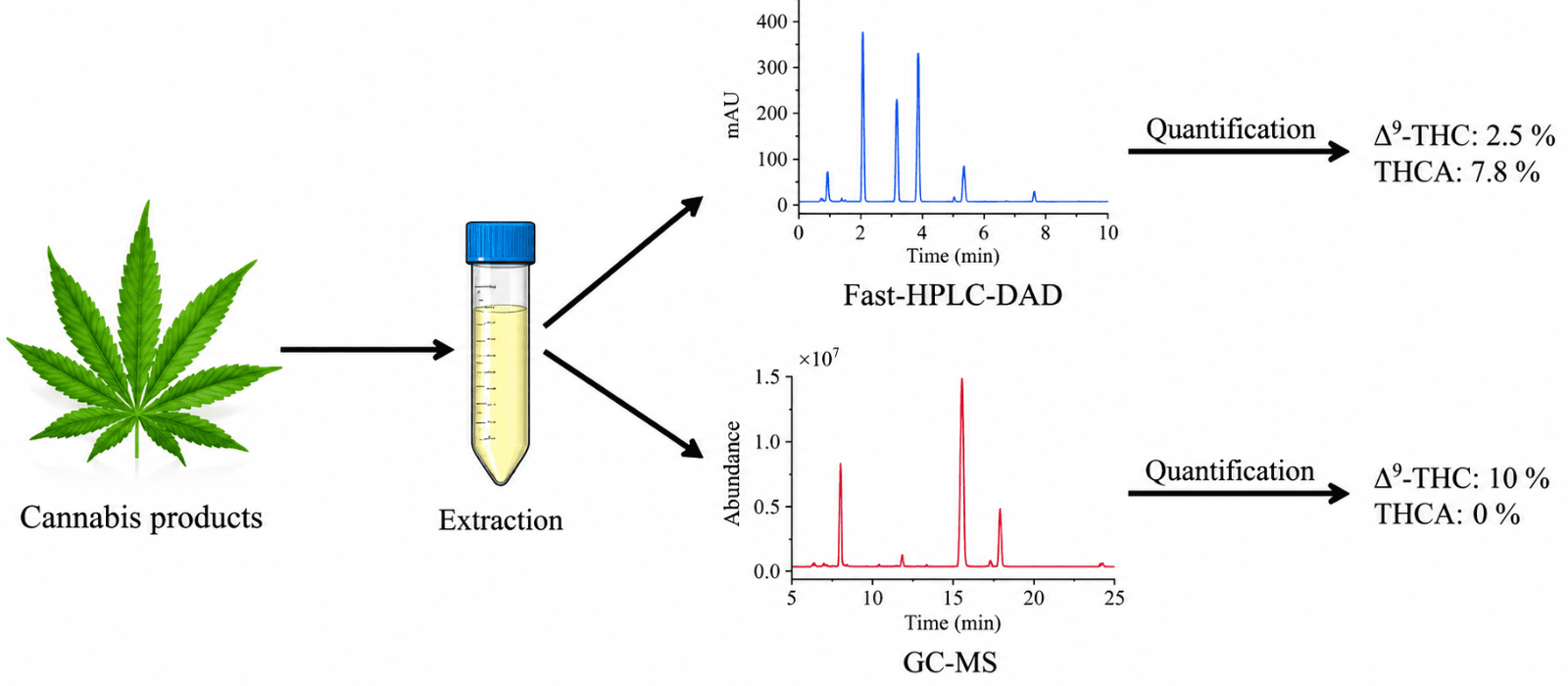
This is also relevant when a product is being analysed. Some laboratory methods deliberately use heat to convert acidic cannabinoids into their neutral forms so that total THC can be measured.
Ask for the Product to Be Properly Documented
If your product is taken for further examination, you can ask for documentation confirming that the product has been seized or taken for analysis.
You can also explain that the product contains THCA and that heating can change the chemical composition of the sample. You should not attempt to interfere with the police investigation or prevent an analysis from taking place.
Instead, make sure that the police have access to the original product information, your receipt and the laboratory report. These documents can help establish what the product was and what its reported composition was before any additional handling or analysis.
Why Heat Can Matter in THCA Testing
The relationship between THCA and THC is important when discussing laboratory testing. THCA is thermally unstable and can decarboxylate when heated. Research has shown that analytical procedures involving high temperatures can convert acidic cannabinoids into their neutral forms.
This means that an analysis performed after a heating step can answer a different analytical question from an analysis designed to identify the cannabinoids in their original acidic and neutral forms.
For this reason, it can be useful to provide the original laboratory report alongside the product. The report provides a record of the product's composition before it was subjected to another analytical procedure.
THCA, THC and Industrial Hemp
THCA is found naturally in cannabis plants, while industrial hemp is cannabis cultivated under specific legal and agricultural requirements. The European Commission explains that hemp covered by the EU Common Agricultural Policy is characterised by very low THC levels and is primarily grown for industrial purposes.
The European Commission currently states that raw true hemp under the relevant CN code must not exceed 0.3% THC, and hemp varieties used under the CAP must meet the applicable THC requirements. EU countries can also apply more restrictive rules.
This is why the exact composition of a cannabis or hemp product matters. A product should not be identified solely by its appearance, because different cannabis products can have substantially different cannabinoid profiles.
Why a Receipt Is Important
The receipt is another useful document to keep with the product. It can help establish where the product was purchased and what product was sold.
The receipt should ideally correspond to the product and its packaging. Keeping these documents together makes it easier to provide consistent information if questions arise.
A receipt does not by itself determine the legal status of a product, but it can be useful supporting documentation alongside the laboratory report and original packaging.
Keep the Product in Its Original Packaging
Whenever possible, keep your THCA product in the packaging in which it was sold. Do not transfer it into an unmarked container or remove the product label unnecessarily.
Original packaging can contain important information such as the product name, batch information, cannabinoid content, manufacturer or seller information and other product details.
Having the product, packaging, receipt and laboratory report together creates a clearer documentation trail and can make it easier to identify the exact product that was purchased.
What If the Police Seize the Product?
If the police take the product, remain calm and cooperate with the investigation. Ask for documentation confirming that the product has been taken if such documentation is available under the applicable procedure.
You can also provide the laboratory report and explain that the product contains THCA. If the police intend to analyse the sample, you can point out that heating can cause THCA to convert into THC.
Do not attempt to alter, destroy or hide the product. The best approach is to preserve your documentation and let the relevant authorities conduct their investigation according to the applicable procedures.
THCA Products and Laboratory Reports
A professional laboratory report can provide considerably more information than a simple product label. Depending on the laboratory and the testing method, cannabinoid testing can identify compounds such as THCA, THC, CBD and other cannabinoids.
Laboratory analysis is especially relevant for products where the distinction between acidic cannabinoids and their neutral forms matters. Scientific reviews of cannabinoid analysis explain that different analytical techniques can produce different results depending on whether the sample is heated before measurement.
This is one reason why keeping the original laboratory report is useful. It provides a documented analytical result that can be compared with any later testing.
Legal Cannabis and Hemp in Europe
The European hemp industry is well established. According to the European Commission, the area used for hemp cultivation in the EU has increased significantly over recent years, with hemp being used for textiles, food, construction materials, paper, cosmetics and other industrial applications.
The EU framework also recognises industrial hemp as a crop with very low THC levels. Under the Common Agricultural Policy, eligible hemp varieties must meet specific THC requirements and certified seed requirements.
However, cannabis and cannabinoid products can be subject to additional national rules. This means that the legal treatment of a finished THCA product should not be assumed solely from the general EU rules for hemp cultivation.
Why THCA Products Can Be Confusing During a Police Stop
One of the main difficulties with THCA products is that appearance cannot tell you the exact cannabinoid composition. A green cannabis flower can contain very different levels of THCA, THC, CBD and other cannabinoids.
This is why laboratory testing is important when the exact composition of a product needs to be established. A laboratory report can provide quantitative information that cannot be determined simply by looking at the product.
If you are carrying a THCA product, having the relevant documentation available can therefore make it easier to explain what the product is.
Final Thoughts
Being stopped by the police with a THCA product does not mean you should panic. The best approach is to remain calm, cooperate and provide clear documentation about the product.
Always keep the original packaging, receipt and laboratory report. If the product is analysed, remember that THCA can be converted into THC through heating, which is an important scientific consideration when interpreting cannabinoid test results.
The European Commission's rules for industrial hemp provide an important framework for hemp production in Europe, but the legal treatment of specific finished cannabinoid products can involve additional rules.